
Digital Resources for Students, Parents, Teachers, and Tutors
Complimentary Equation Interpretation Guides, Math Class Readiness Checklists, and more!
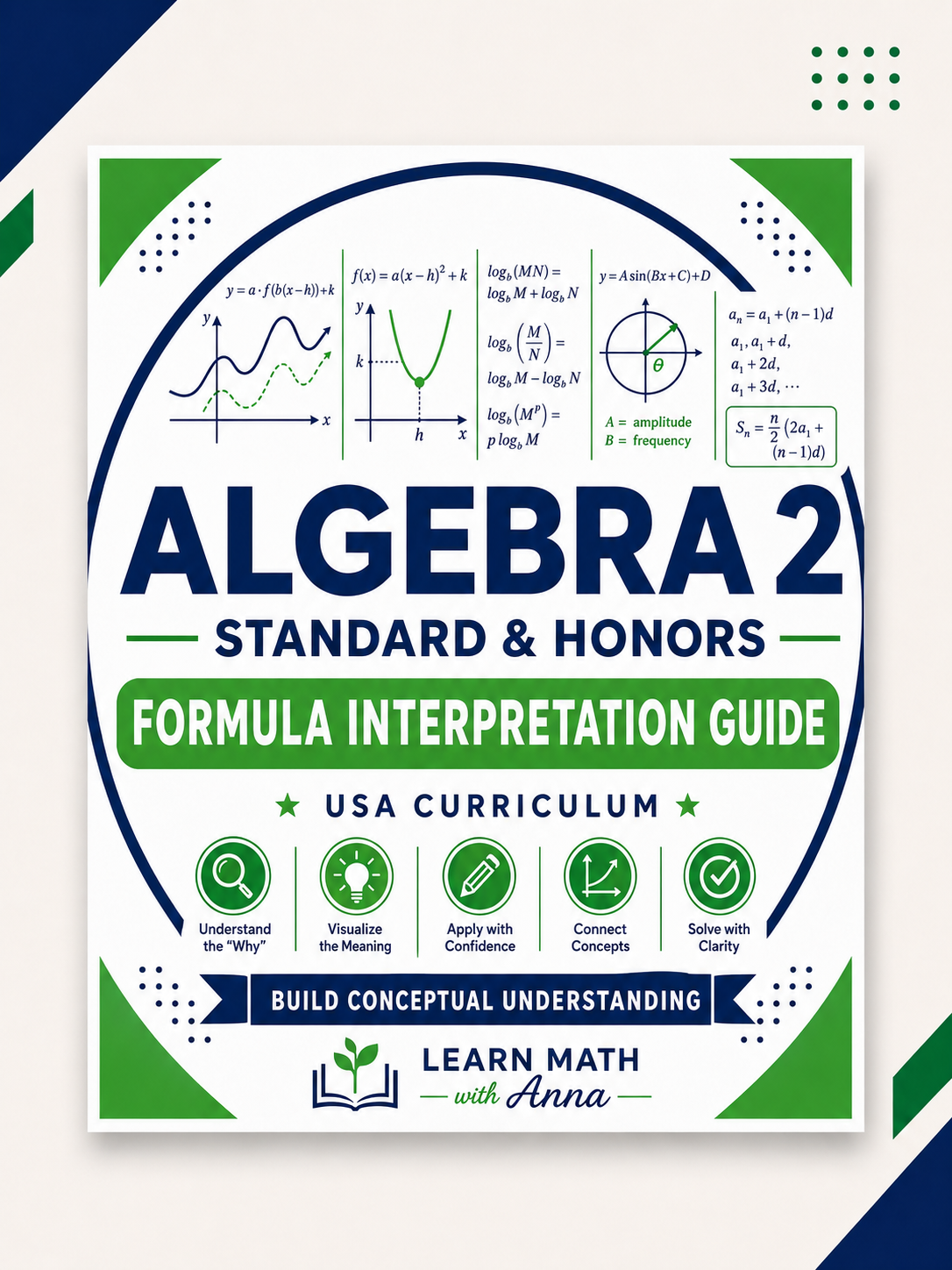
Support students in understanding the deeper meaning behind Algebra 2 formulas with this Algebra 2 Formula Interpretation Guide for standard and honors students. Algebra 2 introduces more advanced function families, transformations, complex numbers, logarithms, sequences, series, trigonometry, and data concepts. This guide helps students interpret the formulas instead of simply memorizing procedures.
As students move into middle school and high school, math often becomes more abstract and the pressure can feel much higher. This guide helps parents understand how math anxiety can show up, how to respond when a student says “I’m just bad at math,” and how to tell the difference between a true skill gap and a confidence gap.
This Student Guide for Communicating with a Math Teacher is a practical resource designed to help middle school and high school students ask for help, clarify expectations, discuss course placement, and advocate for themselves in a respectful and effective way. It includes clear guidance for writing concise, appropriate emails, along with fill-in-the-blank templates students can use in common math class situations.
This AP Statistics Readiness Checklist helps students review the core skills needed for AP Statistics, including linear equations, percentages, proportions, descriptive statistics, probability, graph interpretation, reading comprehension, and logic. Students can use it to identify gaps, prioritize review, and build confidence before beginning a course focused on data interpretation, real-world scenarios, and statistical reasoning.
AP® and Advanced Placement® are registered trademarks of the College Board, which does not endorse, sponsor, or affiliate with this product.
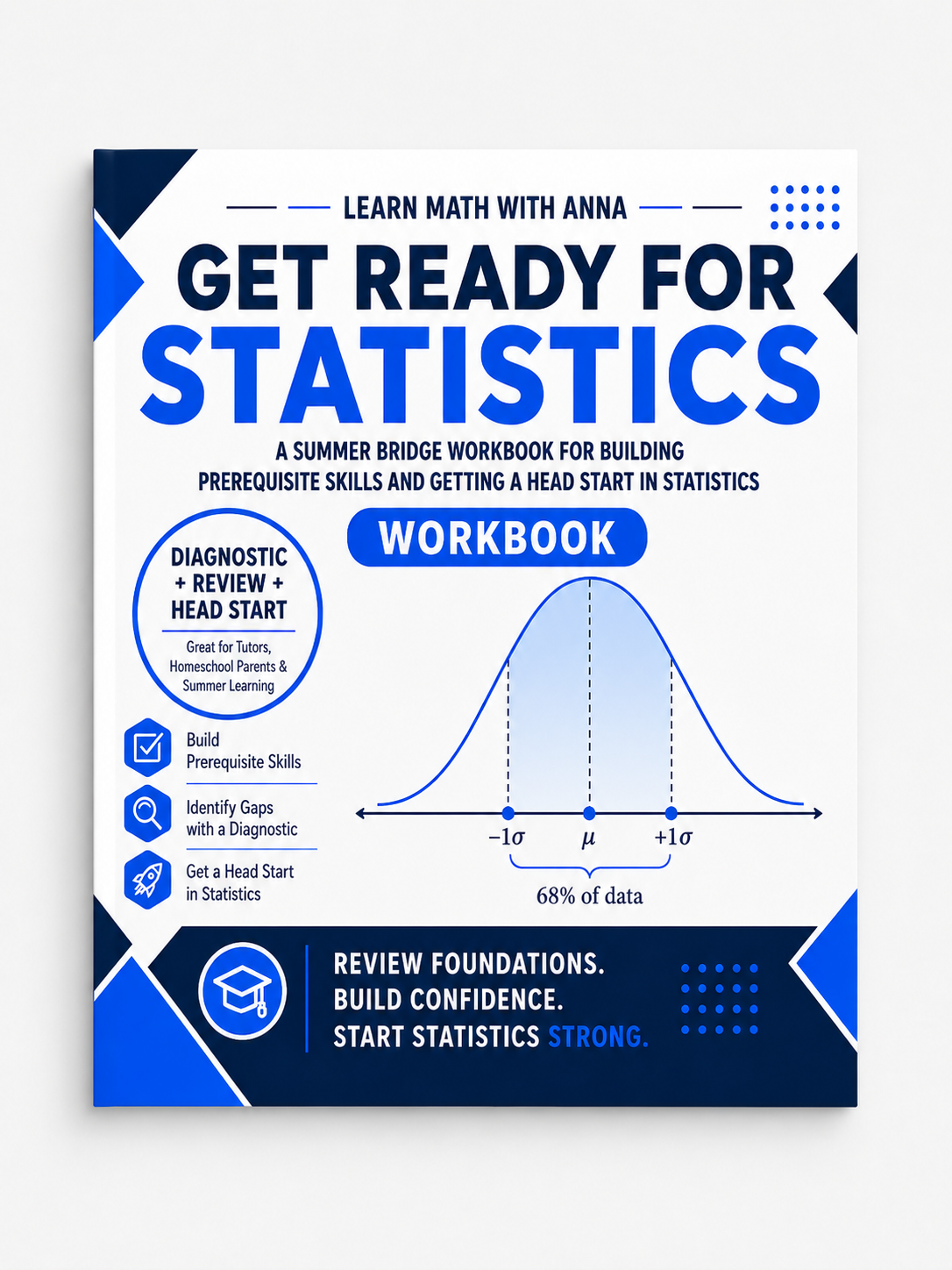
This High School Statistics Readiness Checklist helps students review the foundational skills needed for success in Statistics, including percentages, descriptive statistics, data visualization, probability, two-way tables, linear equations, and formula evaluation. Students can use it to identify gaps, prioritize quick review, and build confidence before starting a statistics course.
This Honors Geometry Readiness Checklist helps students prepare for a rigorous geometry course by reviewing the algebra, coordinate geometry, geometric reasoning, and right-triangle skills they should already know. It is especially useful for identifying gaps before the school year begins, with sections on algebraic fluency, transformations, angle relationships, triangle concepts, trigonometry, and logical reasoning.
This 8th Grade Advanced/Honors Math Readiness Checklist helps students prepare for a fast-paced advanced 8th grade math course by reviewing the Pre-Algebra skills they should already know. It covers rational number operations, expressions, multi-step equations and inequalities, linear relationships, functions, Pythagorean Theorem applications, transformations, angle relationships, and bivariate data so students can identify gaps before the school year begins.
This 6th Grade Advanced/Honors Math Readiness Checklist helps students prepare for an accelerated 6th grade math course by reviewing the key 5th grade skills they should already know. It covers advanced number fluency, fractions, decimals, order of operations, algebraic thinking, multi-step problem solving, early proportional reasoning, coordinate plane skills, volume, and measurement conversions so students can identify gaps before the school year begins.
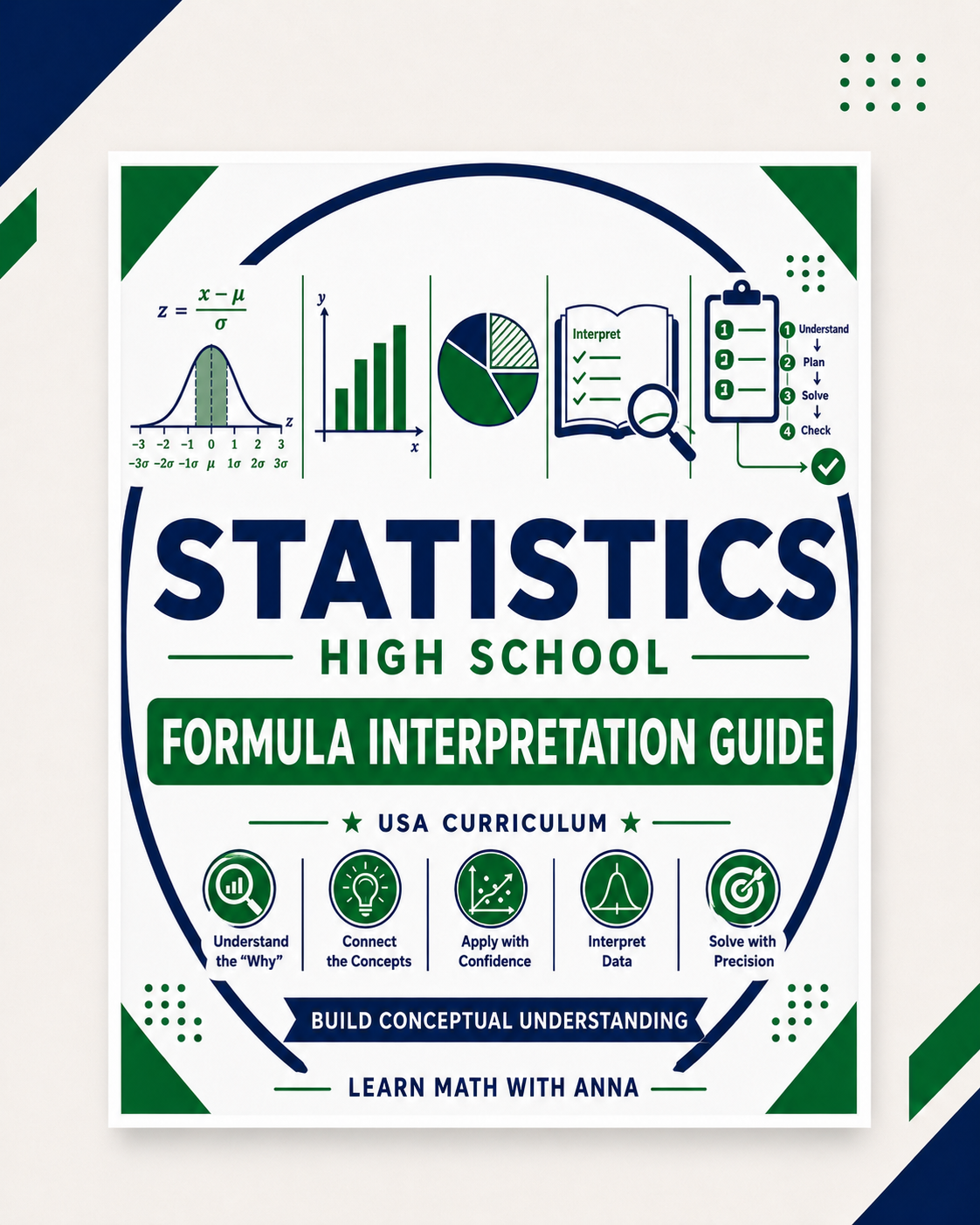
Help students understand the meaning behind statistics formulas with this Statistics Formula Interpretation Guide for high school statistics students. This resource is designed to help students interpret formulas, connect symbols to meaning, and understand what statistical calculations are actually telling them.
Statistics can feel formula-heavy, but the formulas are really tools for describing data, measuring variation, making predictions, and drawing conclusions. This guide helps students understand the “why” behind those tools.
AP® is a trademark registered by the College Board, which is not affiliated with, and does not endorse, this product.
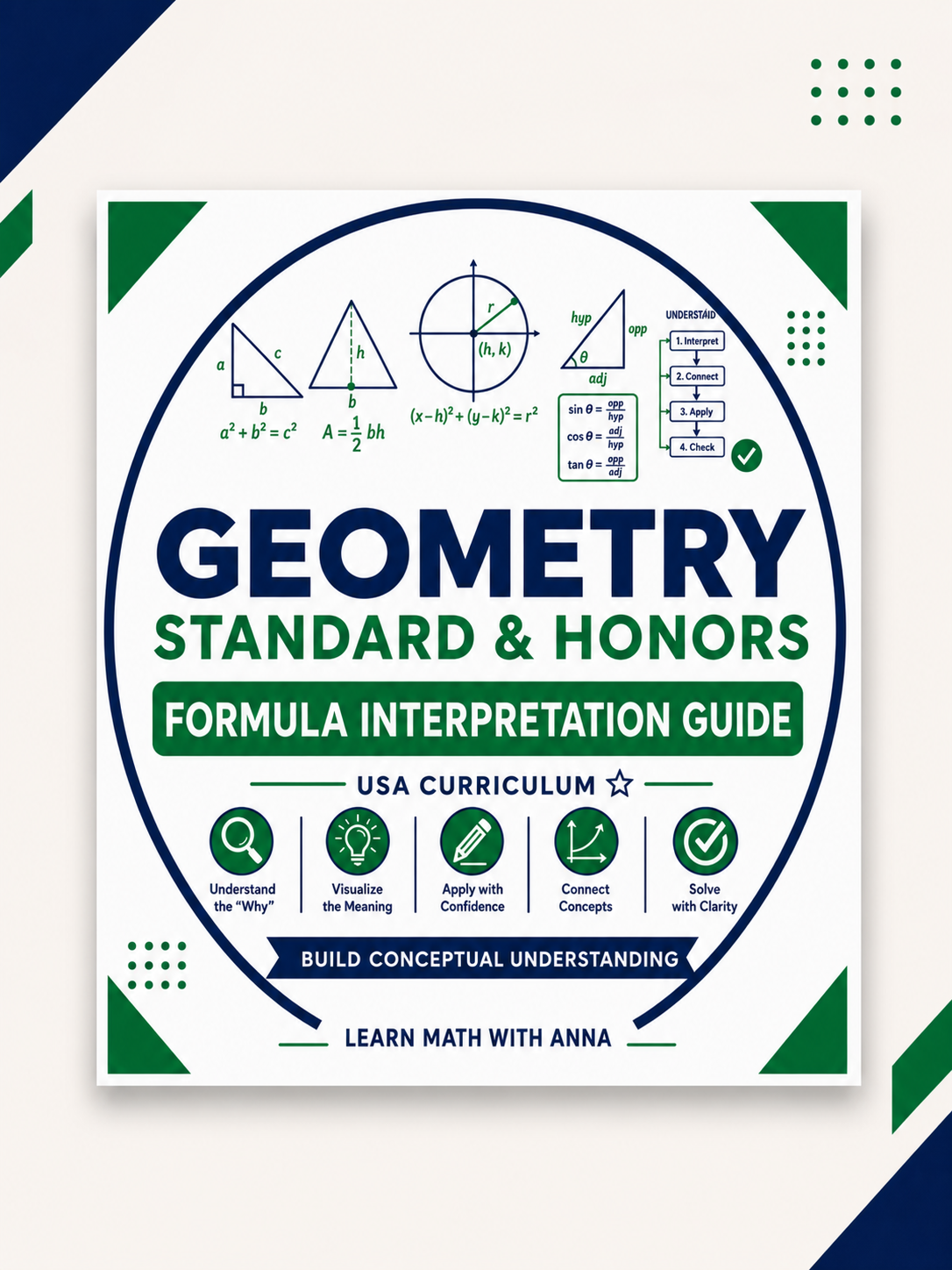
Help students understand what geometry formulas actually mean with this Geometry Formula Interpretation Guide for standard and honors Geometry students. This guide explains the reasoning behind important formulas so students can visualize the math, understand the structure of shapes, and make stronger connections between formulas and geometry concepts.
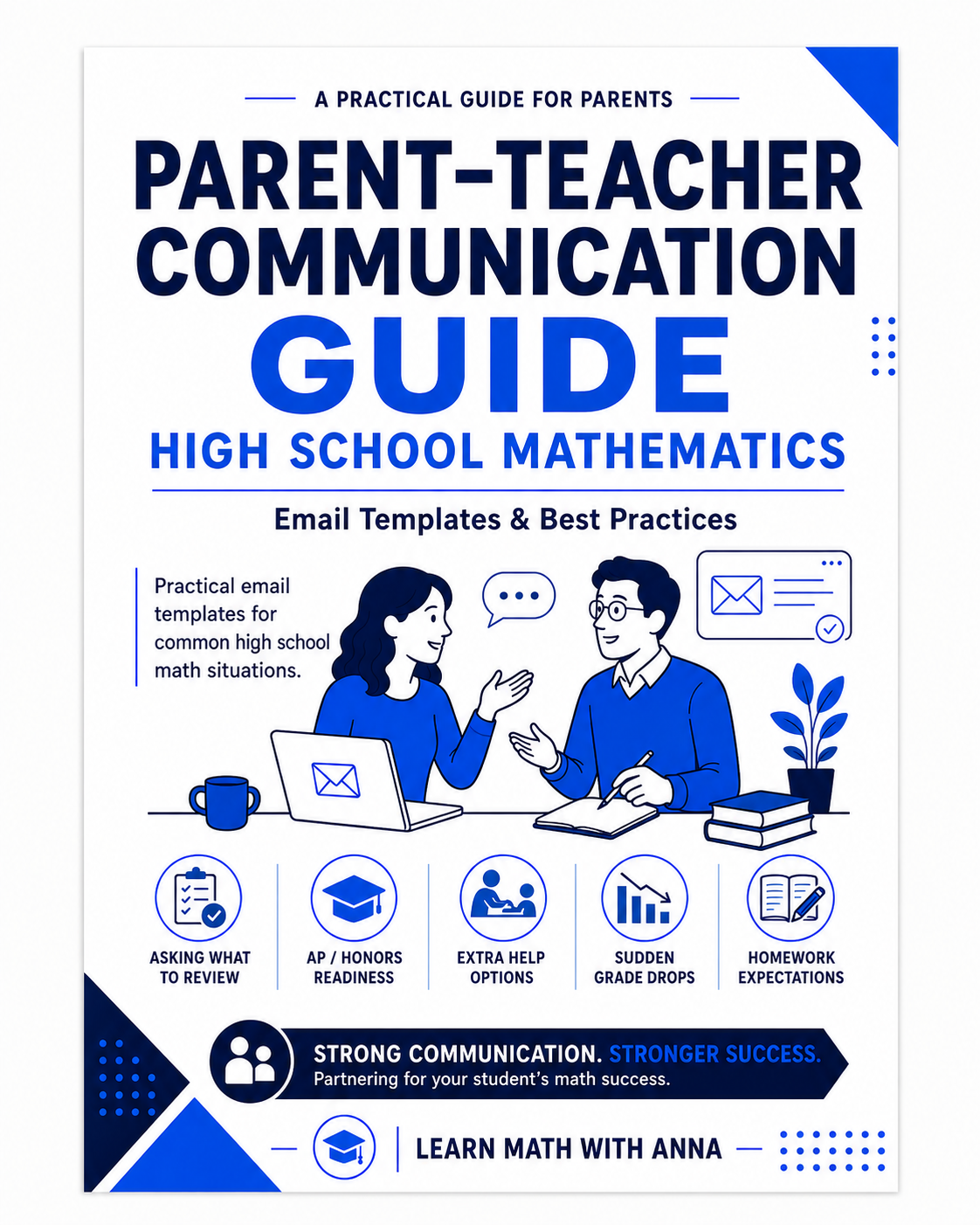
High school math can move quickly, and courses like Algebra, Geometry, Pre-Calculus, Calculus, and Statistics often build cumulatively. When a student starts struggling, communicating early can make a big difference. This guide gives parents clear best practices and ready-to-use email templates for common high school math situations.
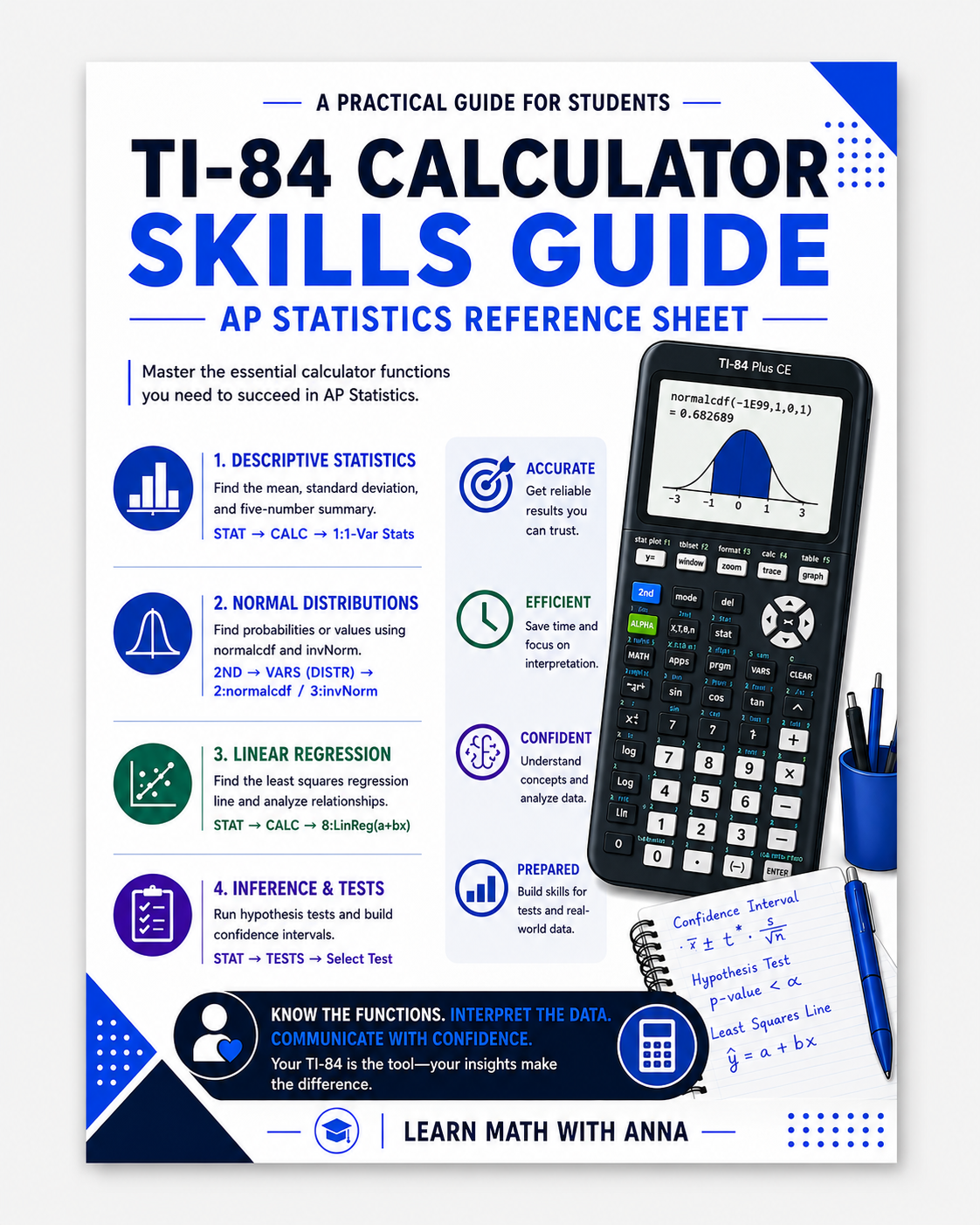
This TI-84 Calculator Skills Guide for AP Statistics gives students step-by-step directions for the most important calculator functions they will use throughout the AP Statistics course. It is designed to help students spend less time worrying about calculator steps and more time focusing on interpreting results, explaining conclusions, and understanding the statistics behind the output.
AP® is a trademark registered by the College Board, which is not affiliated with, and does not endorse, this product.
This AP Calculus BC Readiness Checklist helps students review the advanced prerequisites needed for AP Calculus BC, including parametric equations, vectors, polar coordinates, sequences, series, factorials, sigma notation, partial fractions, advanced algebra, function analysis, limits, and trigonometry. Students can use it to identify gaps, prioritize review, and build confidence before starting a fast-paced course that covers two semesters of college calculus in one year.
AP® and Advanced Placement® are registered trademarks of the College Board, which does not endorse, sponsor, or affiliate with this product.
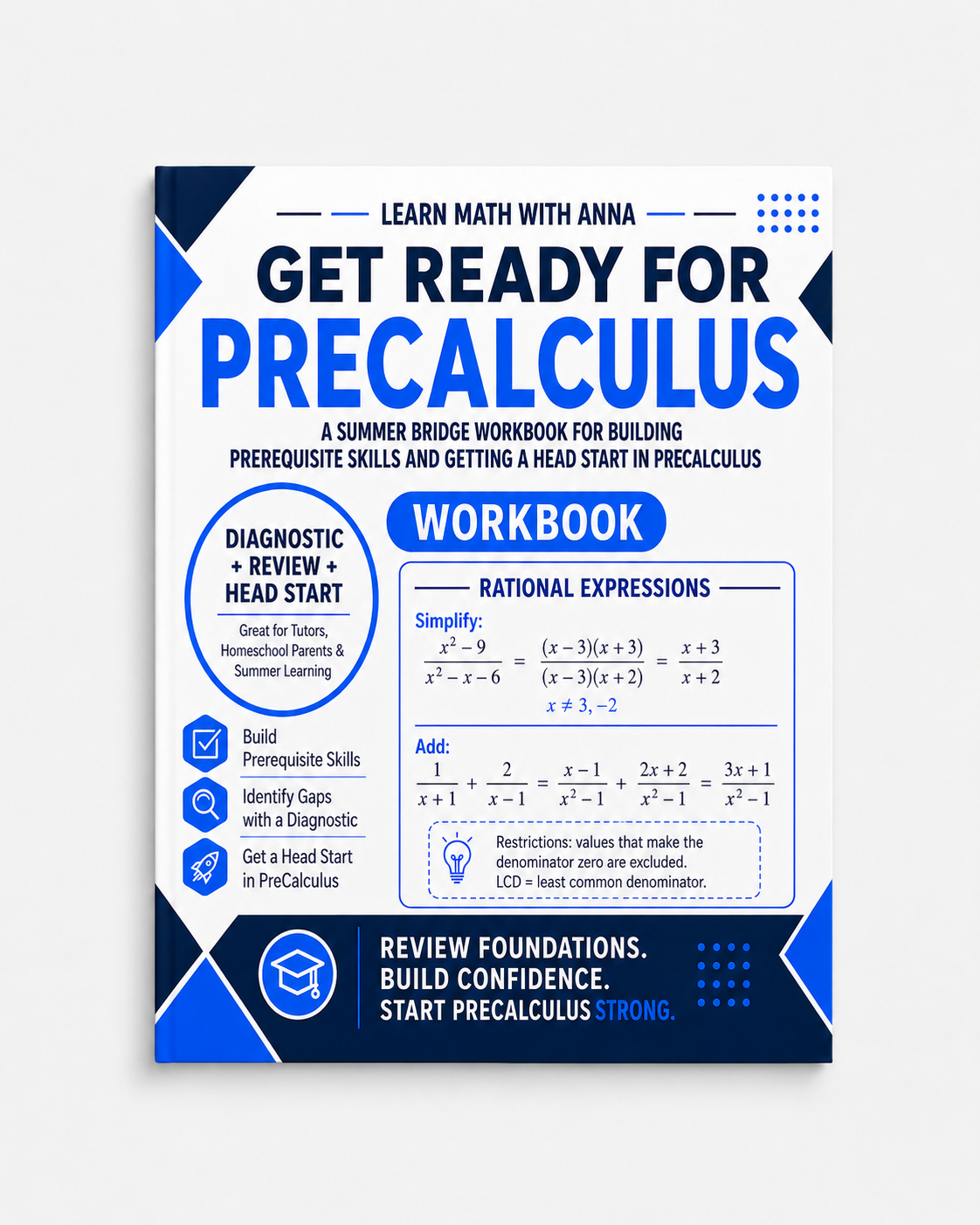
This PreCalculus Readiness Checklist helps students review the Algebra 2 and Geometry foundations needed for success in PreCalculus, including functions, graph transformations, advanced algebra, polynomials, exponentials, logarithms, trigonometry, systems, and coordinate geometry. Students can use it to identify gaps, prioritize quick review, and build confidence before starting the course.
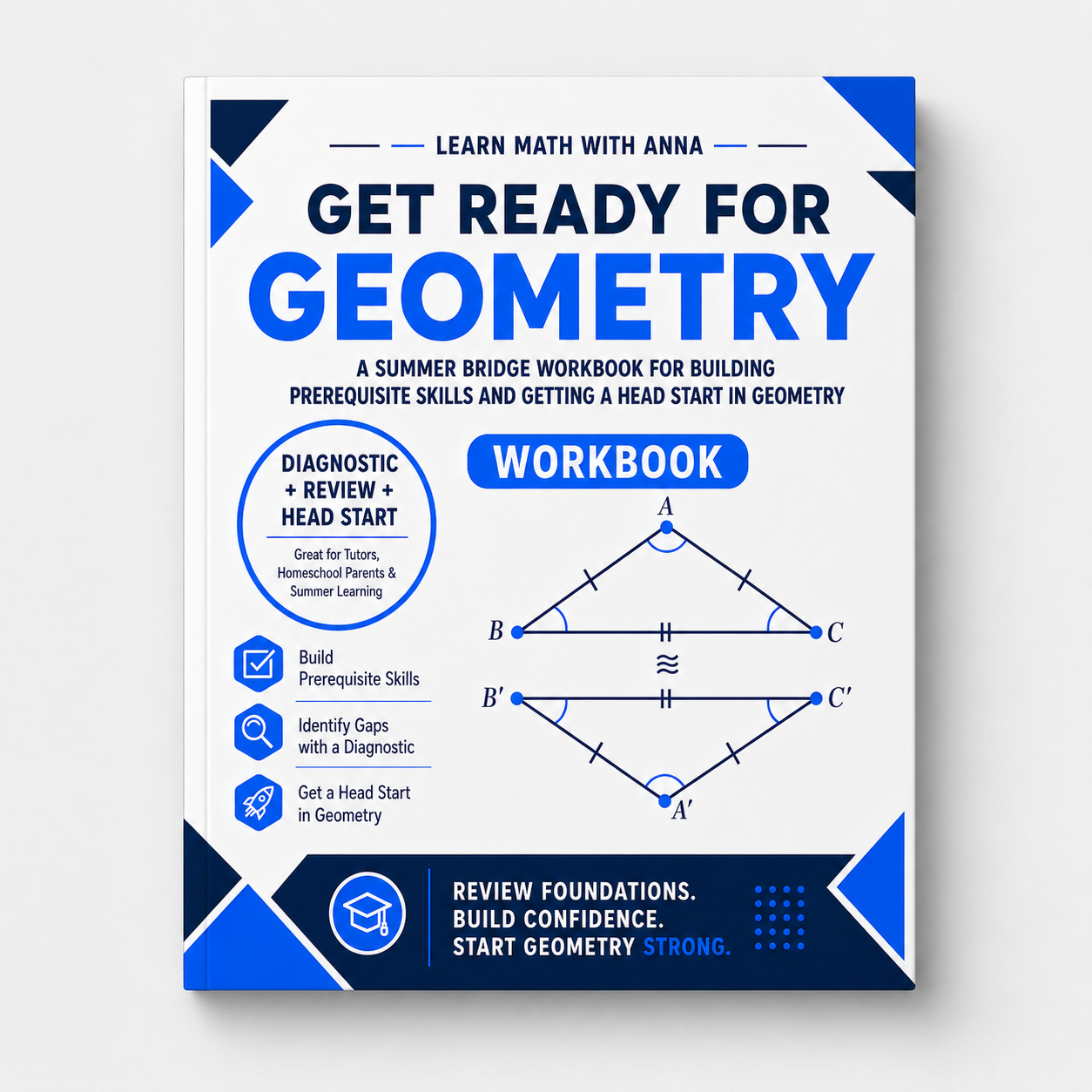
This High School Geometry Readiness Checklist helps students review the key middle school geometry and Algebra 1 skills they need before starting a Common Core Geometry course. It covers algebraic foundations, angle and polygon relationships, coordinate plane skills, transformations, right triangles, area, surface area, and volume so students can identify what to review before the school year begins.
This Grade 8 Math Readiness Checklist helps students review the essential Grade 7 skills they need before starting 8th grade math. It covers proportional relationships, rational number operations, expressions and equations, geometry, statistics, and probability so students can identify areas to review before the school year begins.
This Grade 6 Math Readiness Checklist helps students review the essential Grade 5 math skills they need before starting 6th grade math. It covers whole numbers, decimals, fractions, order of operations, numerical expressions, measurement conversions, volume, coordinate plane skills, and geometry so students can identify areas to review before the school year begins.
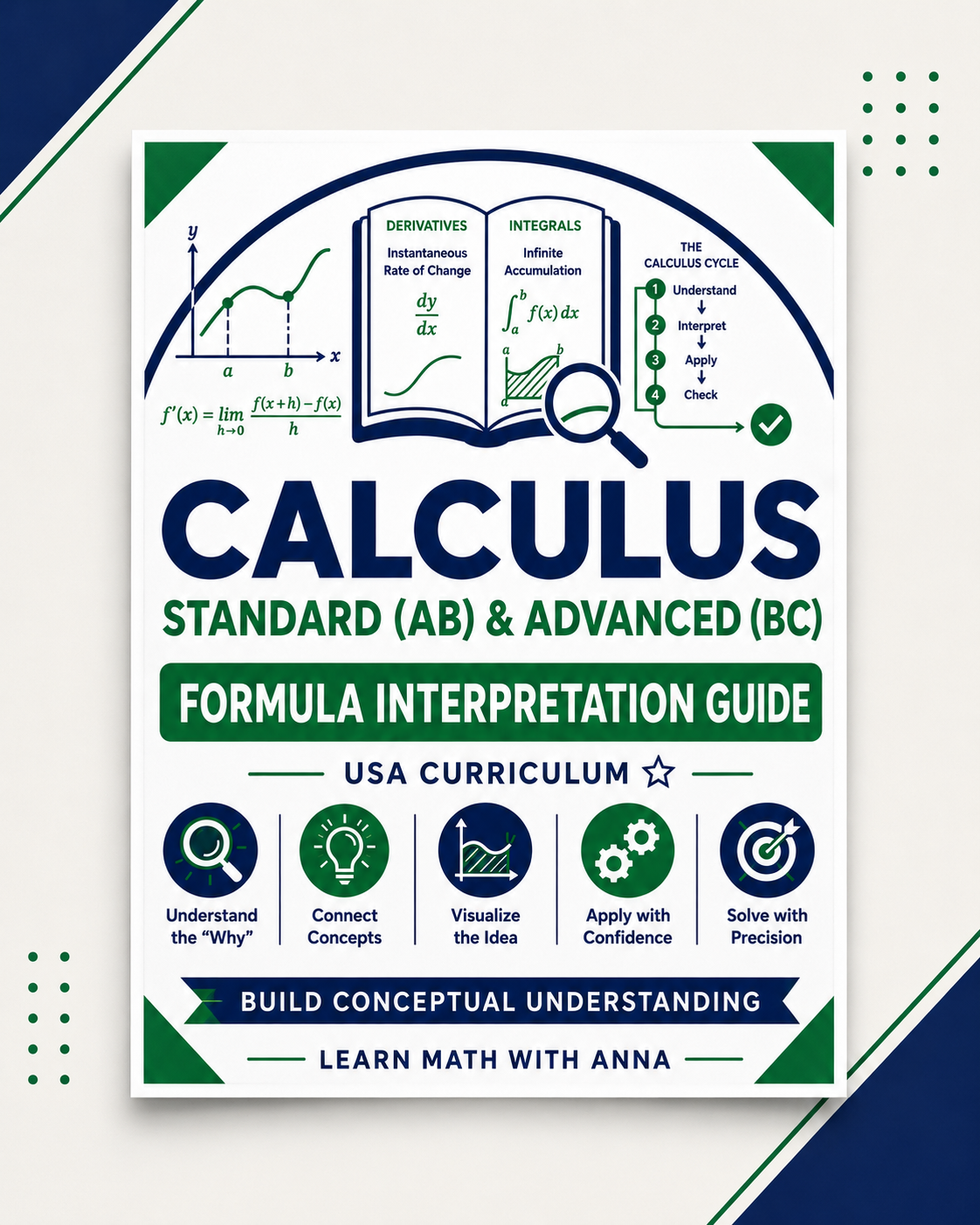
Help students understand the meaning behind major calculus formulas with this Calculus Formula Interpretation Guide for standard Calculus, AP Calculus AB, and AP Calculus BC students. This guide focuses on the big ideas behind calculus: instantaneous rates of change, accumulation, limits, derivatives, integrals, and advanced applications.
Students learn how to interpret formulas conceptually so they can understand what calculus is actually measuring.
AP® is a trademark registered by the College Board, which is not affiliated with, and does not endorse, this product.
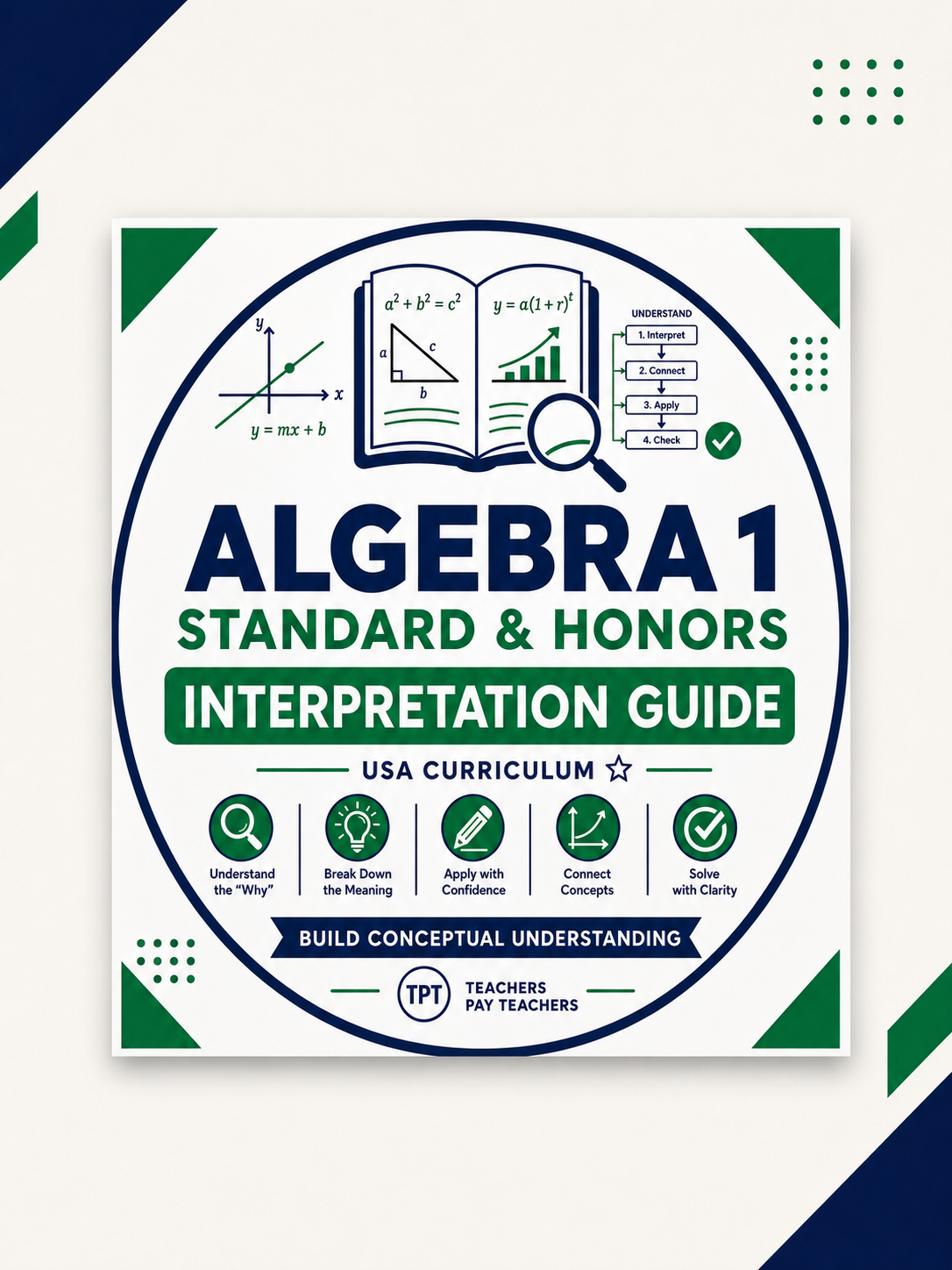
Help students move beyond memorizing formulas with this Algebra 1 Formula Interpretation Guide for standard and honors Algebra 1 students. This guide breaks down important Algebra 1 equations in student-friendly language so students can understand what each formula is actually saying.
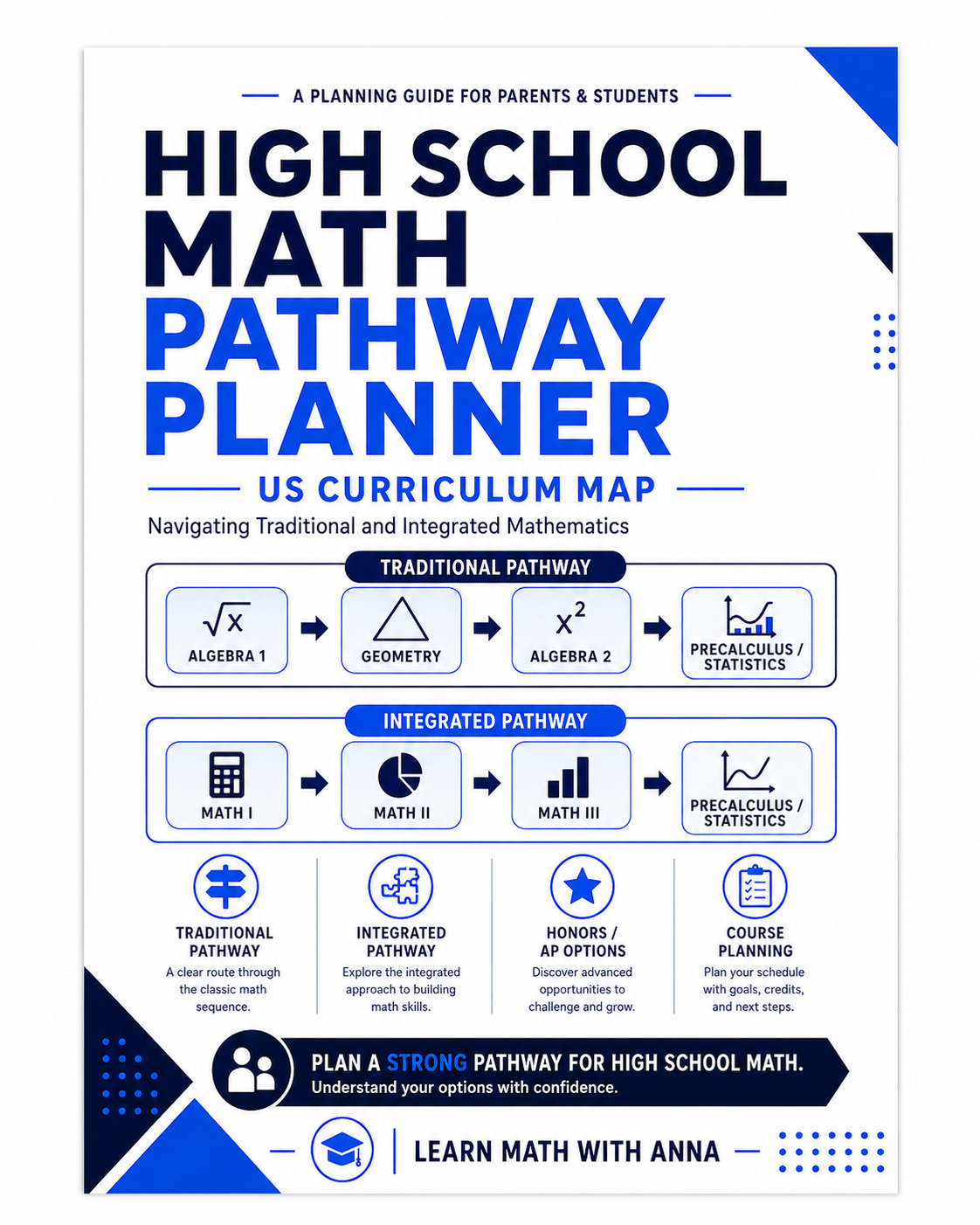
This US Curriculum Map explains the difference between the Traditional Math Pathway and the Integrated Math Pathway, while also showing how standard, honors, highly advanced, and AP-level math tracks typically progress from 9th through 12th grade. It is designed to help students, parents, tutors, and counselors make sense of course options such as Algebra 1, Geometry, Algebra 2, Math I, Math II, Math III, Precalculus, AP Precalculus, AP Calculus AB/BC, and AP Statistics.
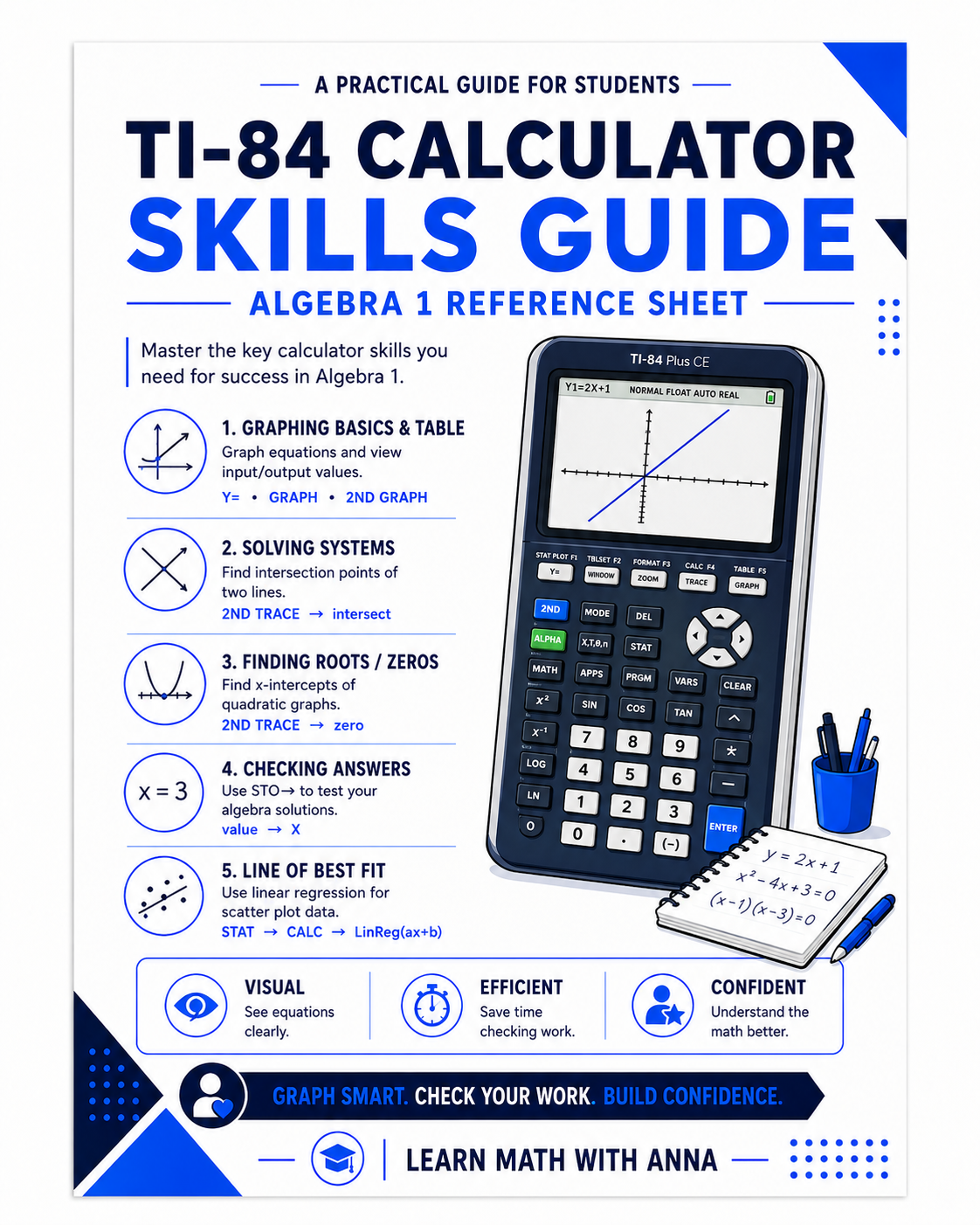
This TI-84 Calculator Skills Guide for Algebra 1 gives students step-by-step directions for the most important calculator skills they will use throughout Algebra 1, including graphing equations, viewing tables, solving systems, finding zeros, checking answers, and calculating lines of best fit. It is designed to help students use their calculator as a tool for understanding, visualizing, and verifying algebraic work.
This AP Calculus AB Readiness Checklist helps students review the algebra, function behavior, graphing, trigonometry, exponentials, logarithms, and analytic geometry skills needed for a strong start in AP Calculus AB. Students can use it to identify gaps, prioritize review, and build confidence before beginning a college-level calculus course.
AP® and Advanced Placement® are registered trademarks of the College Board, which does not endorse, sponsor, or affiliate with this product.
This Honors Algebra 2 Readiness Checklist helps students identify whether they have the strong Algebra 1 foundation needed for a rigorous, fast-paced Honors Algebra 2 course. It covers key prerequisite skills including linear systems, absolute value, factoring, functions, radicals, rational expressions, and quadratic equations so students can spot gaps and prioritize review before the school year begins.
This Honors Algebra 1 Readiness Checklist helps students prepare for a fast-paced, rigorous Algebra 1 course by reviewing the advanced Pre-Algebra skills they should already know. It covers rational number fluency, algebraic expressions, multi-step equations and inequalities, linear graphing, functions, word problems, and geometric applications so students can identify gaps before the school year begins.
This 7th Grade Advanced/Honors Math Readiness Checklist helps students prepare for an accelerated 7th grade math course by reviewing the 6th grade skills they should already know. It covers ratios, rates, percentages, rational numbers, algebraic expressions and equations, inequalities, geometry, surface area, volume, and statistics so students can identify gaps before the school year begins.
Help students build a stronger bridge from Algebra 2 to Calculus with this Precalculus Formula Interpretation Guide for standard, honors, and AP Precalculus students. This guide helps students understand the meaning behind advanced formulas, graphs, identities, and notation used throughout Precalculus.
This resource is ideal for students who need support interpreting formulas conceptually, especially as math becomes more abstract and function-based.
AP® is a trademark registered by the College Board, which is not affiliated with, and does not endorse, this product.
Help parents feel more confident supporting their teen in high school math — even if they do not remember Algebra, Geometry, Algebra 2, or Calculus themselves.
This practical parent guide is designed to help parents and guardians understand how to support students through the transition into high school math. Instead of focusing on teaching parents the math content, this guide focuses on the strategies parents can actually use: building a growth mindset, encouraging better study habits, navigating advanced/Honors/AP classes, and knowing when to step in versus when to step back.
High school math can feel overwhelming for both students and families. This resource gives parents clear, realistic, and supportive advice they can use right away.
This Math Anxiety Guide: Student Edition is a supportive, student-friendly resource designed for middle school and high school students who feel stressed, overwhelmed, or discouraged in math. It explains that struggling with math does not mean a student is “bad at math,” and gives students simple tools for changing their mindset, managing homework, calming test panic, using diagnostic tests productively, and asking for help.
This AP Precalculus Readiness Checklist helps students identify whether they have the Algebra 1, Geometry, Algebra 2, function analysis, polynomial, rational expression, exponent, logarithm, and introductory trigonometry skills needed for a strong start in AP Precalculus. Students can use the checklist to spot gaps, prioritize review, and build confidence before beginning the course.
AP® and Advanced Placement® are registered trademarks of the College Board, which does not endorse, sponsor, or affiliate with this product.
This High School Calculus Readiness Checklist helps students review the key Pre-Calculus foundations needed for success in Calculus, including algebraic manipulation, functions and graphs, trigonometry, analytic geometry, and coordinate algebra. Students can use it to identify weak areas, prioritize review, and build confidence before starting limits, derivatives, and integrals.
This Algebra 2 Readiness Checklist helps students review the essential Algebra 1 skills they need before starting Algebra 2. It guides students through key prerequisite topics including linear equations and systems, functions and graphing, exponents and radicals, polynomials and factoring, and quadratic equations so they can identify areas to review before the school year begins.
This Algebra 1 Readiness Checklist helps students review the essential Pre-Algebra and Grade 8 math skills they need before starting Algebra 1. It covers real numbers, exponents, linear equations, systems, functions, Pythagorean Theorem applications, geometry formulas, and scatter plots so students can identify areas to review before the school year begins.
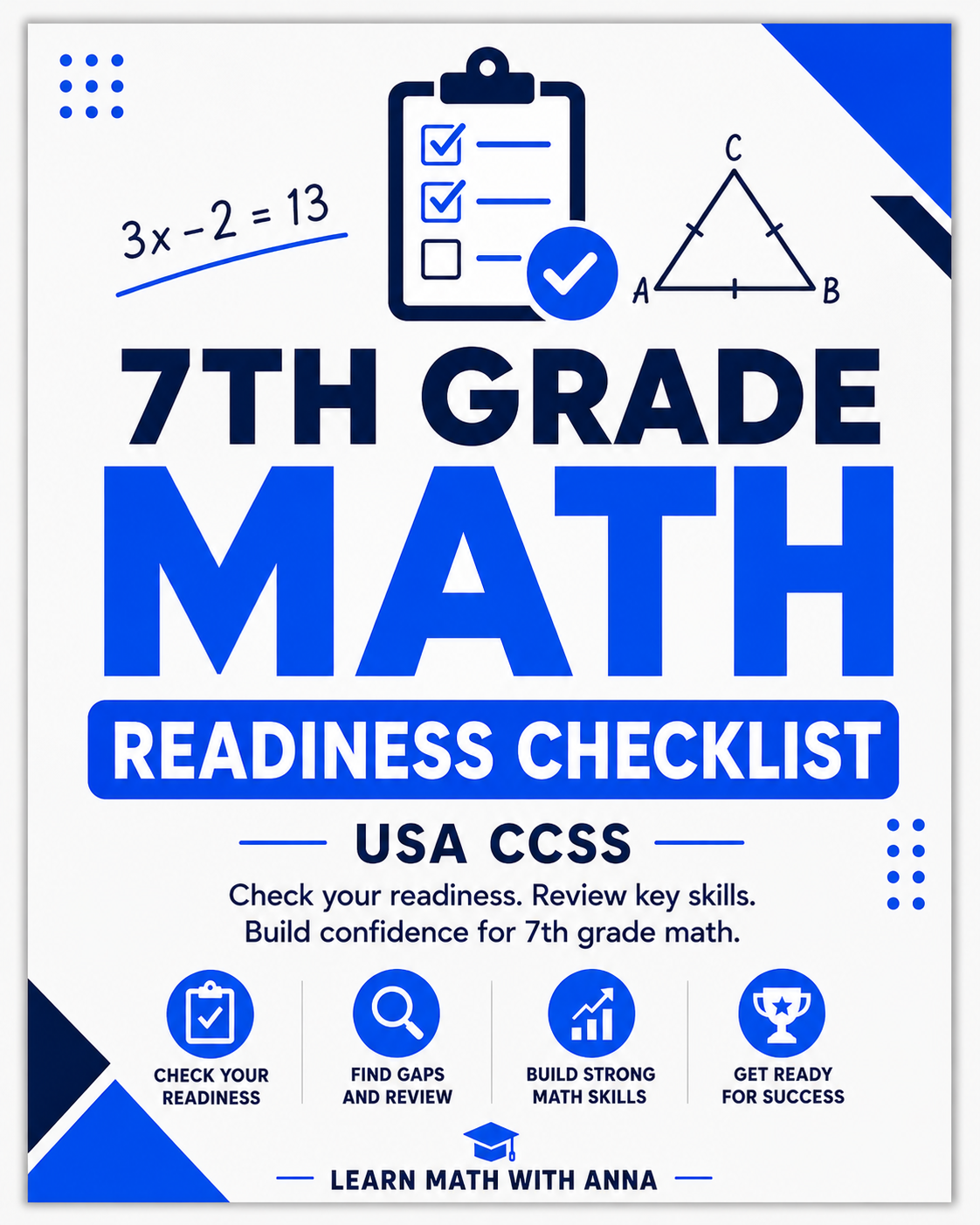
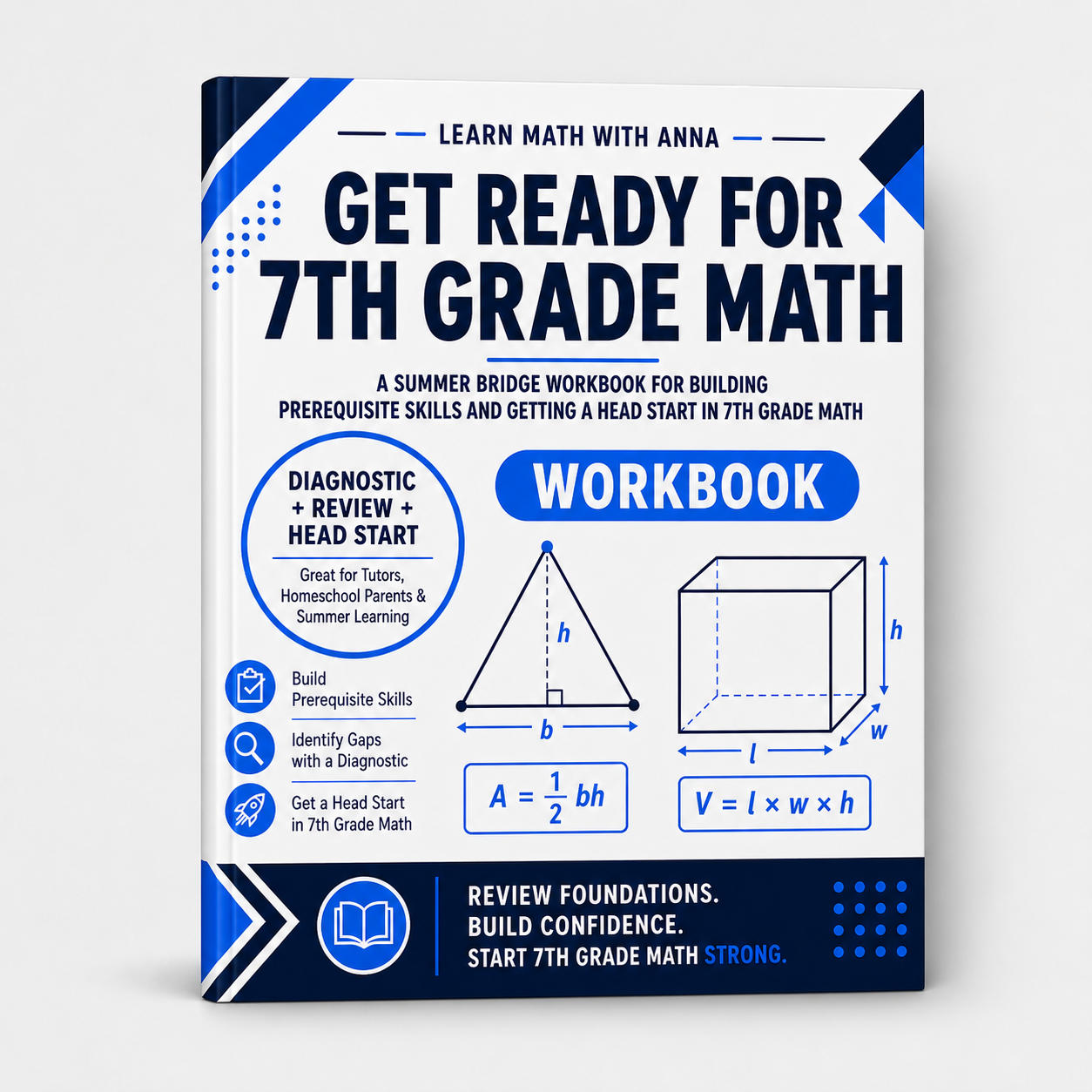
This Grade 7 Math Readiness Checklist helps students review the essential Grade 6 skills they need before starting 7th grade math. It covers ratios and rates, fractions, decimals, negative numbers, expressions and equations, geometry, surface area, volume, statistics, and probability so students can identify areas to review before the school year begins.
Get Ready for Math Class Digital Workbooks
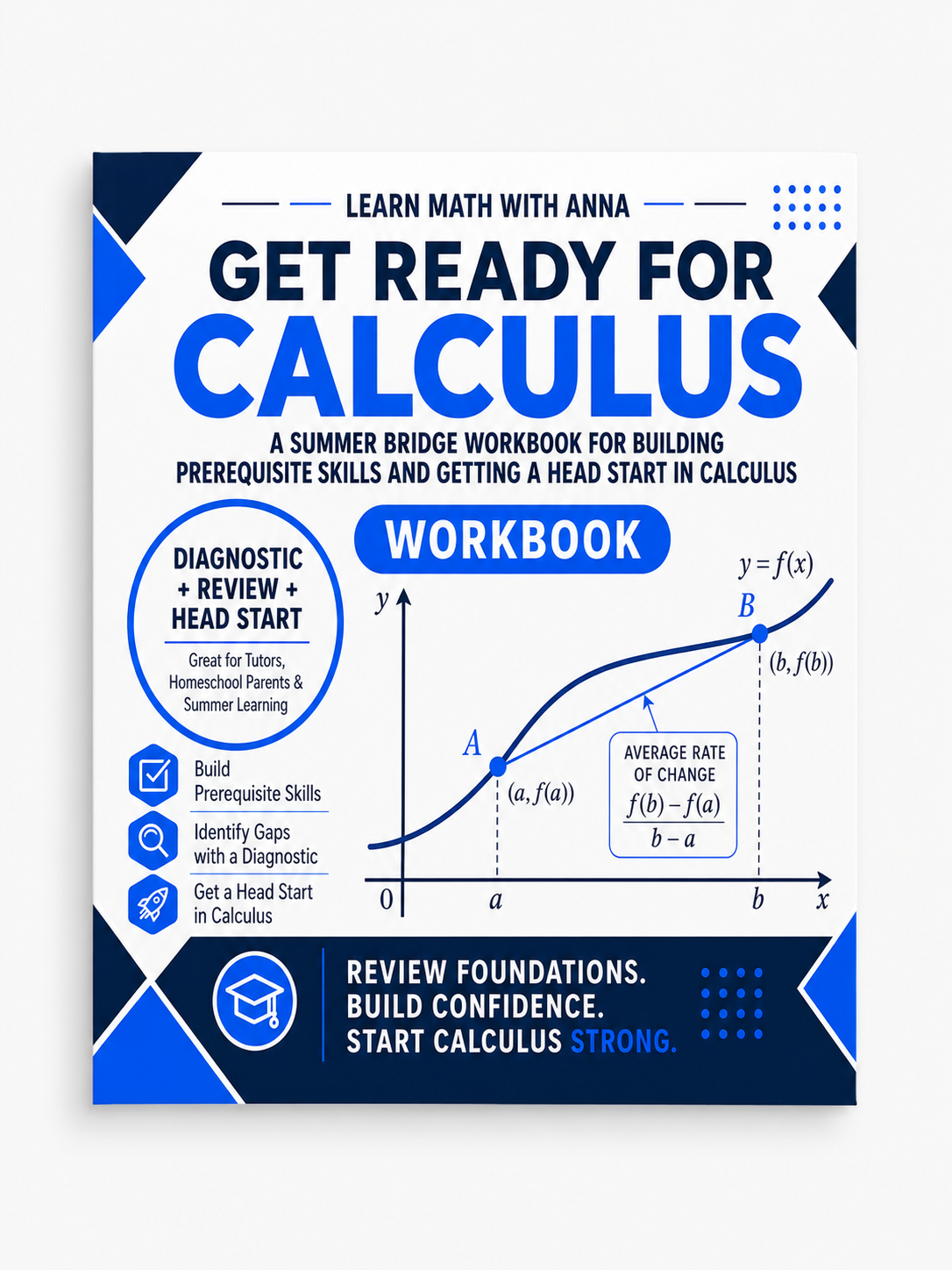
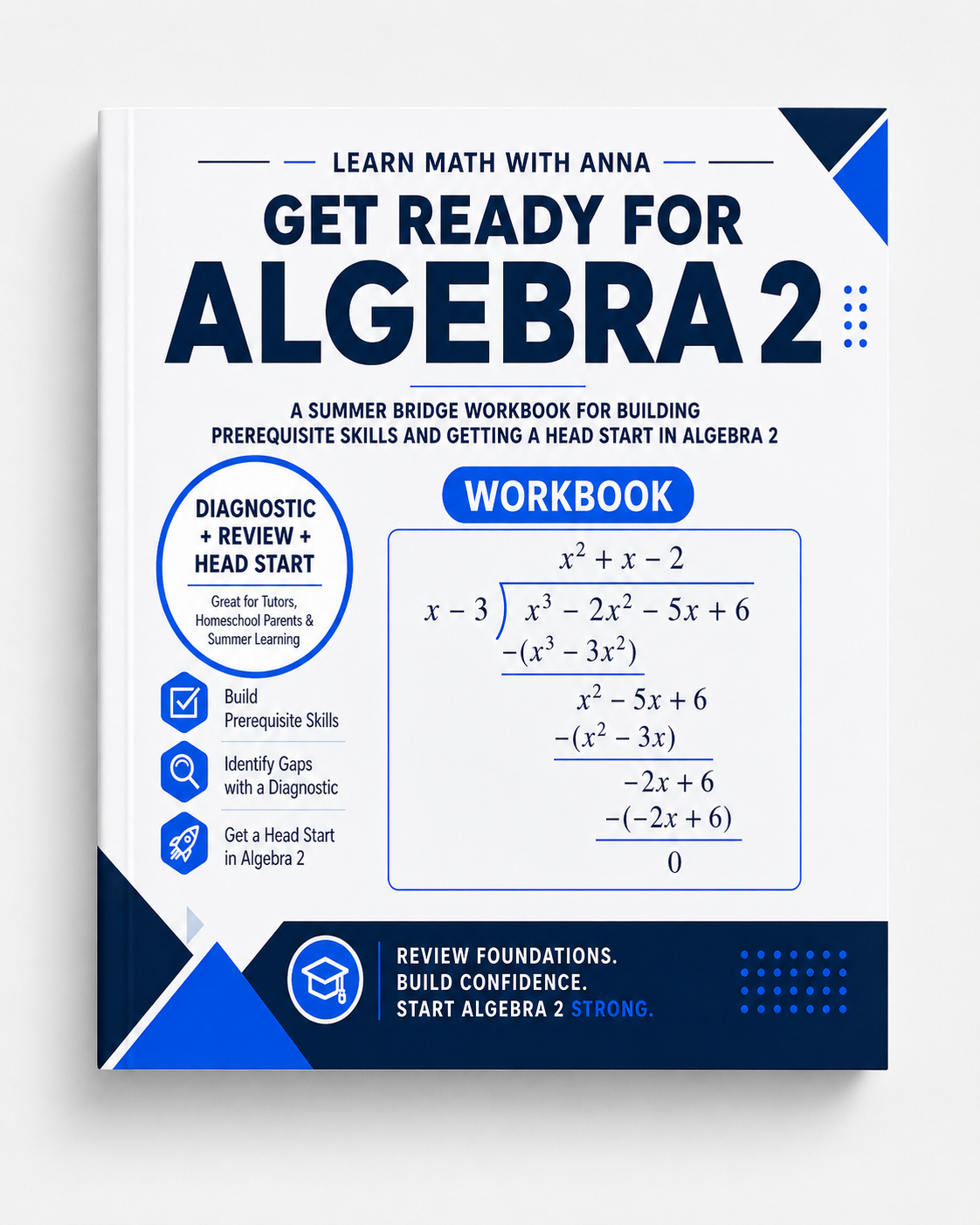
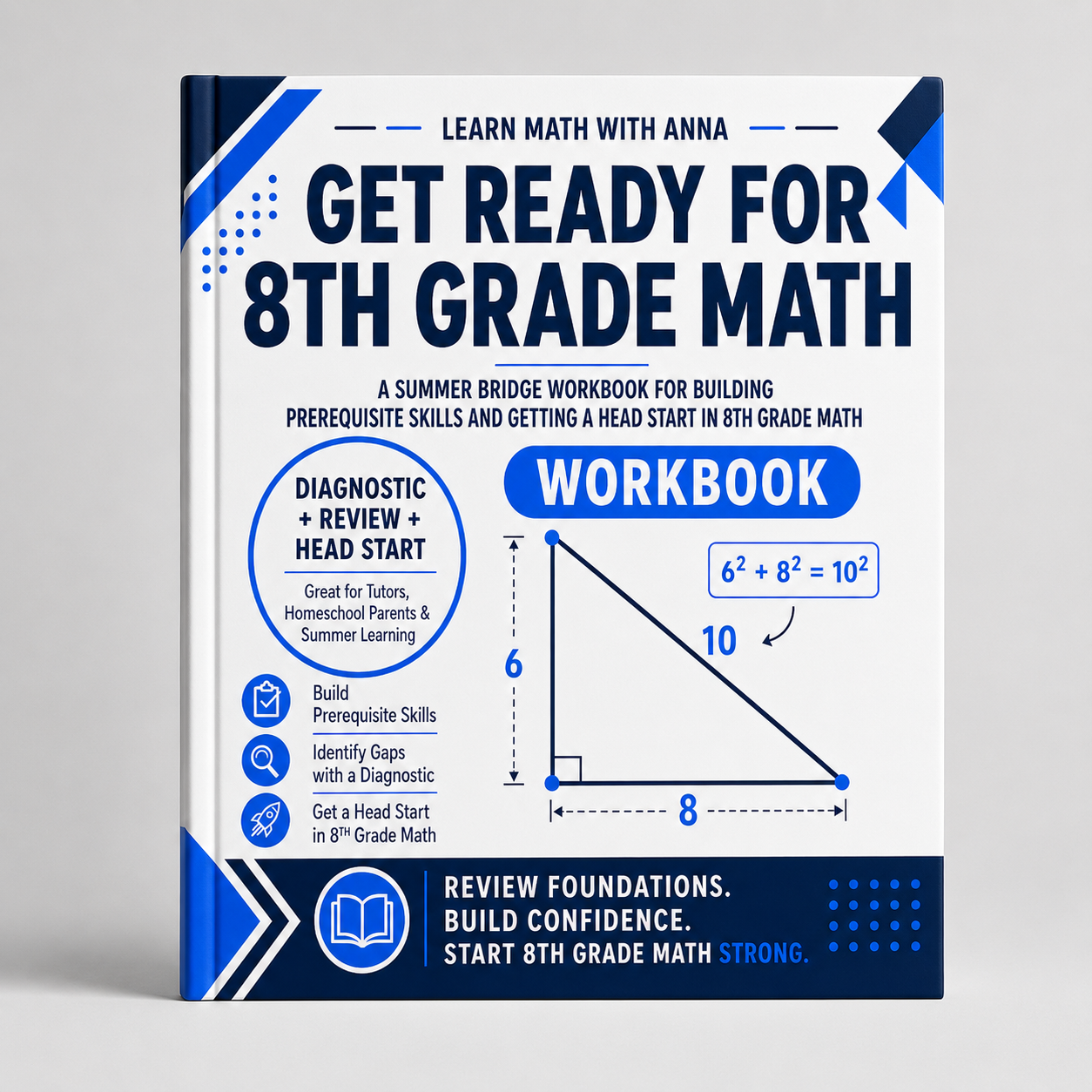
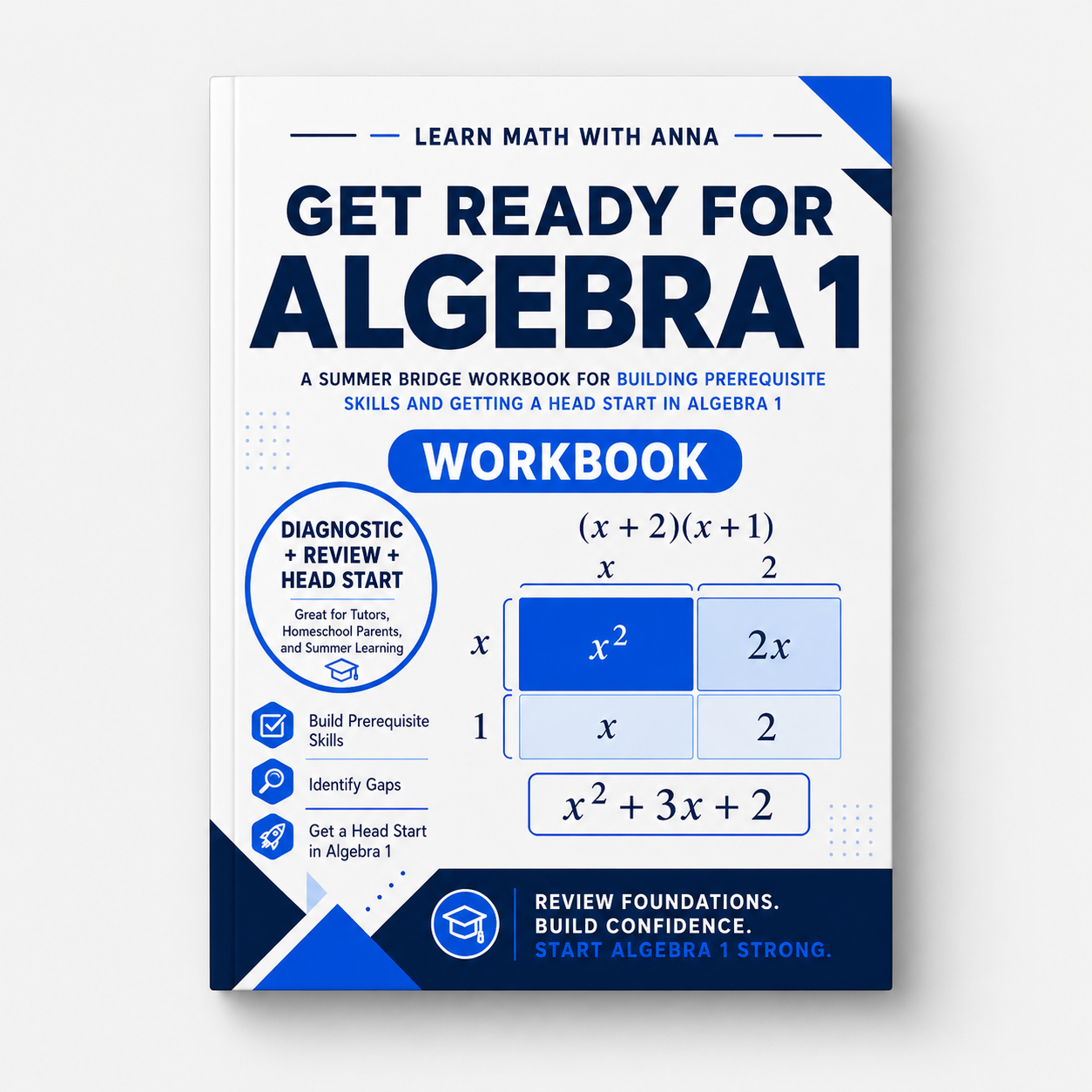
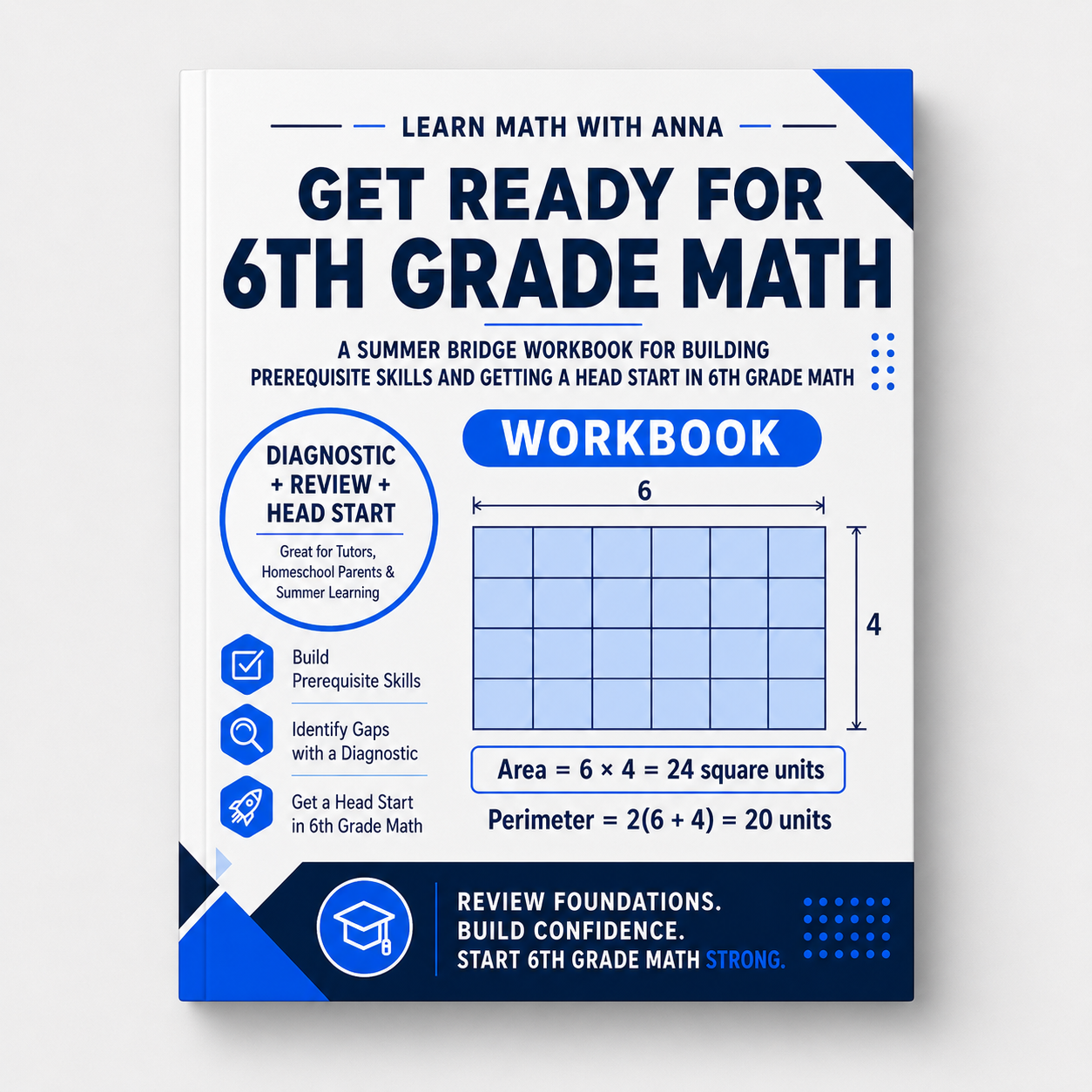
Summer Review Digital Workbooks
(Coming Soon, ~June 7th)
Contact us
Interested in working together? Fill out some info and we will be in touch shortly. We can’t wait to hear from you!